If you picture your Florida move with a boat tied up behind the house, a Cape Coral canal home can feel like the obvious choice. But for many buyers, especially those relocating from Minnesota or elsewhere in the Midwest, the better question is simpler: Will you really use the water lifestyle often enough to pay for it and maintain it? This guide will help you compare canal-front and nonwaterfront living in Cape Coral so you can match your budget, daily routine, and long-term plans with the right type of home. Let’s dive in.
Why This Choice Matters in Cape Coral
Cape Coral is built around the water in a way few cities are. According to the City of Cape Coral, the city has more than 400 miles of waterways, including about 300 linear miles of freshwater canals along with saltwater canal areas.
That means waterfront living is not a small niche here. It is a major part of the local housing market, and it shapes how buyers think about lifestyle, access, maintenance, and value.
For many out-of-state buyers, the real decision is not whether canal homes look appealing. They usually do. The decision is whether direct access, water views, and shoreline ownership fit the way you plan to live in Cape Coral.
Canal Homes Offer a Water-Centered Lifestyle
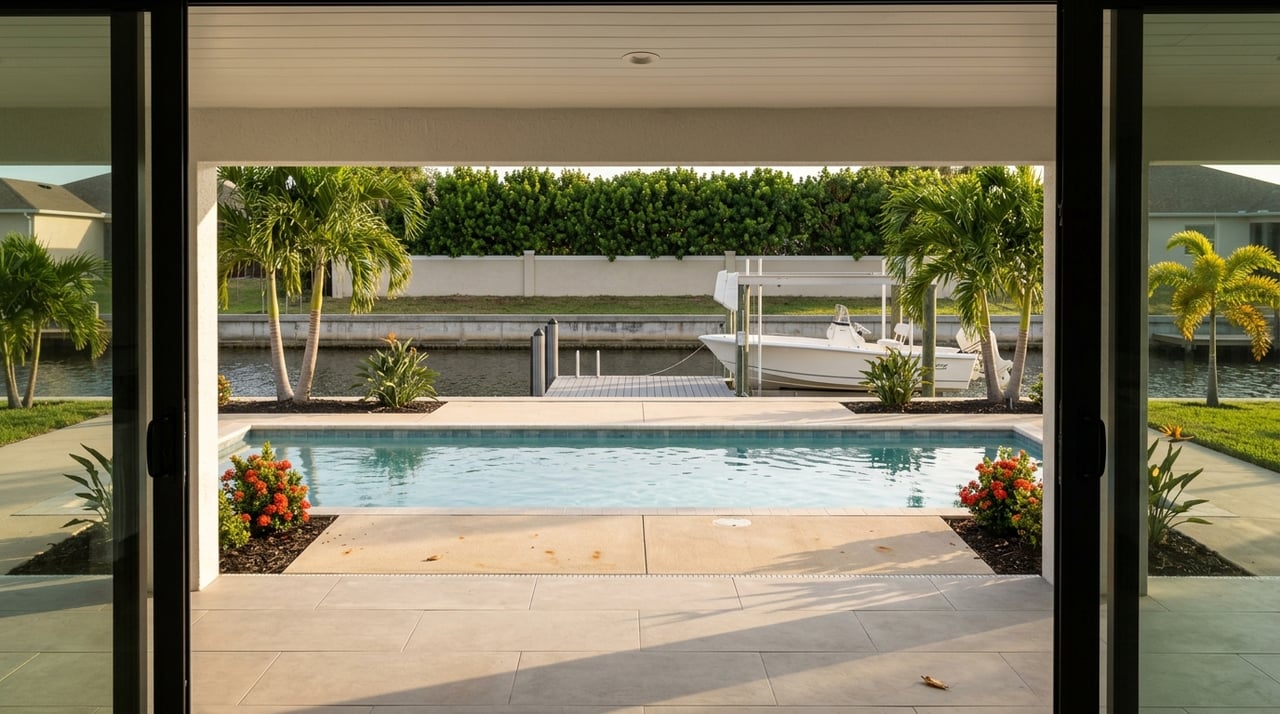
If you want your home to feel tied to boating, fishing, and outdoor time, canal-front living stands out. Many waterfront listings highlight features like direct Gulf access, no bridges, private docks, boat lifts, wide canal views, freshwater settings, and lakefront frontage.
In practical terms, a canal home can change your routine. Instead of loading the car and heading to a launch site every time you want to get on the water, you may be stepping into the backyard, walking to your dock, and heading out from home.
Cape Coral also supports a boating lifestyle with public boat ramps, and the city notes that some are available 24/7. The city also notes that Florida requires a boating safety course for people born on or after January 1, 1988.
Who Usually Benefits Most
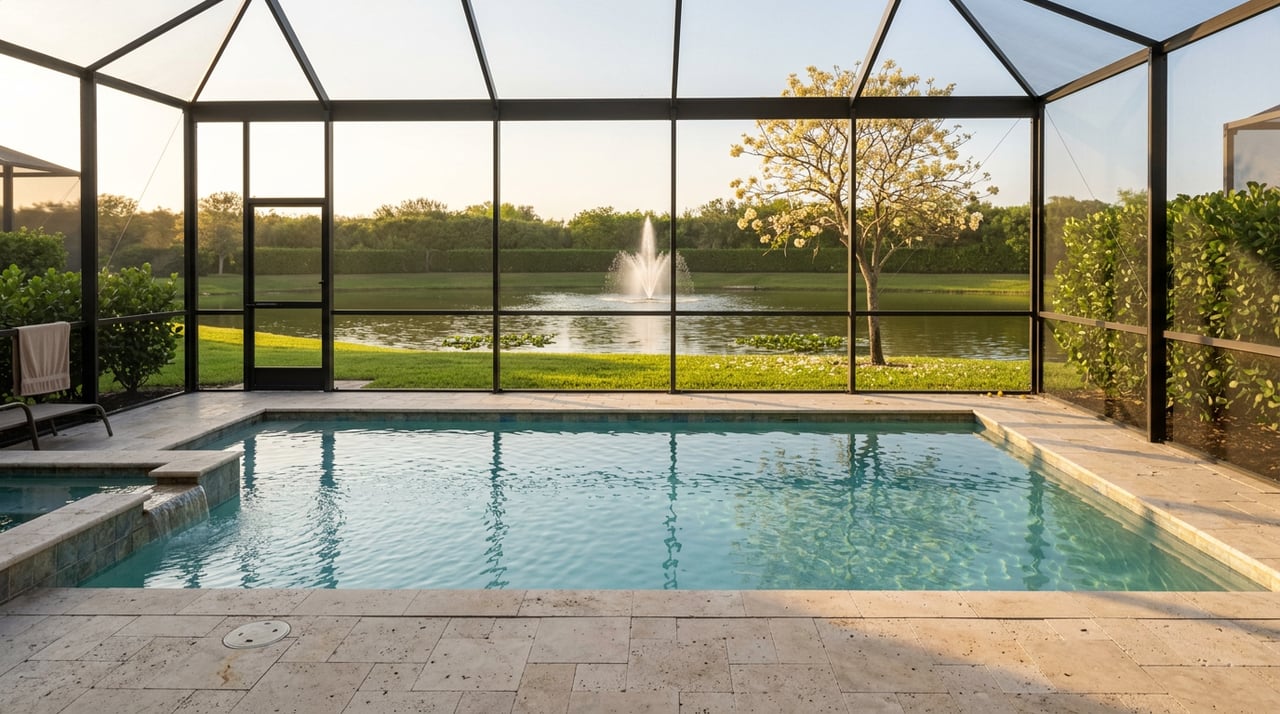
A canal home often makes the most sense if you expect to use the water regularly. That can include buyers who plan to boat often, fish from home, entertain outdoors, or simply spend a lot of time enjoying canal views from the lanai or patio.
If that sounds like your day-to-day vision, paying a premium for waterfront can be easier to justify. You are not just buying a house. You are buying a lifestyle you expect to use often.
Nonwaterfront Living Is Often Simpler
Nonwaterfront homes appeal to buyers who want Cape Coral without the added layer of shoreline ownership. You can still enjoy the area’s boating access, parks, and coastal setting while keeping your property setup more straightforward.
For many buyers, that simplicity matters. You may have fewer moving parts to manage compared with a canal-front property, especially if you are a seasonal owner, second-home buyer, or relocating from out of state.
There is also the budget factor. Inland and nonwaterfront homes in Cape Coral generally trade at lower price points than many waterfront properties, which can leave more room for furnishings, updates, travel, or simply a more comfortable monthly payment.
Why Some Buyers Prefer Inland Homes
A nonwaterfront home may be the better fit if your priority is house size, layout, or overall value rather than direct water access. If you expect to spend more time at the pool, golf course, beach, or exploring the region than boating from your own backyard, inland living can make a lot of sense.
This option can also work well if you want the Cape Coral location but do not want to build your plans around dock upkeep, canal conditions, or shoreline responsibilities. In that case, the lower-maintenance path may feel like the smarter buy.
Waterfront Ownership Comes With More Upkeep
One of the biggest differences between canal homes and nonwaterfront homes is what you are responsible for after closing. Cape Coral’s waterfront guide makes clear that ownership along the water involves more than enjoying the view.
The city notes that seawalls are not required for properties on freshwater canals. It also discusses shoreline buffers, rip-rap, mangrove trimming permits, and the area referred to as the back ten feet above the waterline.
For saltwater canals, the city notes added marine activity, including oysters and barnacles on docks and seawalls. The guide also notes that canal waters can include manatees, dolphins, and alligators.
What That Means for Buyers
In everyday terms, waterfront ownership usually involves more monitoring and more vendor coordination than a typical inland backyard. You may need to think differently about landscaping, dock or lift upkeep, and how you manage the water-facing side of the property.
That does not mean waterfront ownership is a problem. It simply means you should go in with clear expectations. For many buyers, the lifestyle benefits outweigh the extra work. For others, the easier routine of a nonwaterfront home is the better long-term match.
Price Differences Are Real
Cape Coral’s market currently gives buyers more breathing room than during the peak frenzy of prior years. Redfin describes Cape Coral as a buyer’s market and reports a median sale price around $365,000, while Zillow shows an average home value of about $339,638 and roughly 3,341 homes for sale.
Waterfront inventory carries a premium. Redfin’s waterfront page shows 2,394 waterfront homes with a median listing price of $415,000, and sampled waterfront listings on Zillow range from about $450,000 into the $1.7 million and up range.
On the nonwaterfront side, prices are generally lower. Recent examples in Cape Coral include inland and no-HOA homes around $324,990, $369,500, $383,900, and $389,000, and a recent nonwaterfront sale in the Yacht Club area closed at $292,000.
The Premium Is Not One Fixed Number
This is important for buyers to understand. There is no single waterfront premium that applies to every canal home.
Value rises based on the features attached to the water. Direct Gulf access, no bridges, a private dock, a boat lift, a wide canal, and lakefront frontage can all push pricing higher.
That is why comparing a canal home to a nonwaterfront home should go beyond headline price. You need to compare what you are actually getting and whether those features support the way you plan to live.
HOA Status Is a Separate Question
Some buyers assume waterfront automatically means an HOA, or that avoiding an HOA means giving up access to the best water options. In Cape Coral, that is not necessarily the case.
Redfin’s current no-HOA search shows 419 homes at a median listing price of $416,000, and those results include canal-front, inland, and lakefront properties. That means waterfront and no-HOA can exist together in this market.
The key is not to make assumptions. HOA status needs to be checked property by property and neighborhood by neighborhood, whether you are looking at canal homes or inland homes.
How to Decide Which Fit Is Better
If you are trying to sort this out from another state, start with your real routine instead of your idealized one. A lot of buyers love the idea of keeping a boat behind the house, but not every buyer ends up using that feature enough to justify the added cost and responsibility.
Ask yourself a few practical questions:
- Will you boat often enough to benefit from direct canal access?
- Do water views matter to you every day, or would you rather put that money into more house?
- Are you comfortable managing dock, lift, or shoreline upkeep?
- Are you planning to live in Cape Coral full time, seasonally, or as a second-home owner?
- Would a simpler inland property free up money for travel, furnishings, or future upgrades?
A Simple Rule of Thumb
If boating and water views are a daily-use priority, a canal home is often the stronger lifestyle buy. If your goal is to maximize house size, reduce shoreline upkeep, and keep more flexibility in your budget, a nonwaterfront home often offers better value for the money.
Neither choice is automatically better. The right answer depends on how you want your home to function once the excitement of the move wears off and everyday life begins.
Why Local Guidance Helps
This is where many relocation buyers benefit from a more detailed, side-by-side approach. Two homes can look similar online but offer very different ownership experiences depending on canal type, boating access, features, and ongoing maintenance expectations.
If you are moving from Minnesota to Southwest Florida, it also helps to work with someone who understands the transition itself. Comparing home types is only part of the decision. Timing a sale in one state and a purchase in another can be just as important.
When you want practical guidance on Cape Coral neighborhoods, waterfront tradeoffs, and how this decision fits into a bigger relocation plan, connect with Steve Comstock. He helps buyers make informed moves with a clear strategy and a steady hand.
FAQs
What is the main advantage of a Cape Coral canal home?
- A canal home gives you direct access to a water-centered lifestyle, which may include boating, fishing, dock time, outdoor entertaining, and daily water views.
What is the main advantage of a nonwaterfront home in Cape Coral?
- A nonwaterfront home is often simpler to manage and usually comes at a lower price point than many waterfront properties.
Do all Cape Coral canal homes have Gulf access?
- No. Waterfront value varies by features such as direct Gulf access, no bridges, private docks, boat lifts, wide canals, freshwater canal settings, and lakefront frontage.
Do freshwater canal homes in Cape Coral require a seawall?
- According to the City of Cape Coral’s waterfront guide, seawalls are not required for properties on freshwater canals.
Are no-HOA homes available in Cape Coral for waterfront buyers?
- Yes. Current no-HOA inventory in Cape Coral includes canal-front, inland, and lakefront properties, so HOA status should be checked case by case.
Is Cape Coral currently a buyer’s market for home shoppers?
- Redfin describes Cape Coral as a buyer’s market, which may give buyers more leverage than in the peak years.